
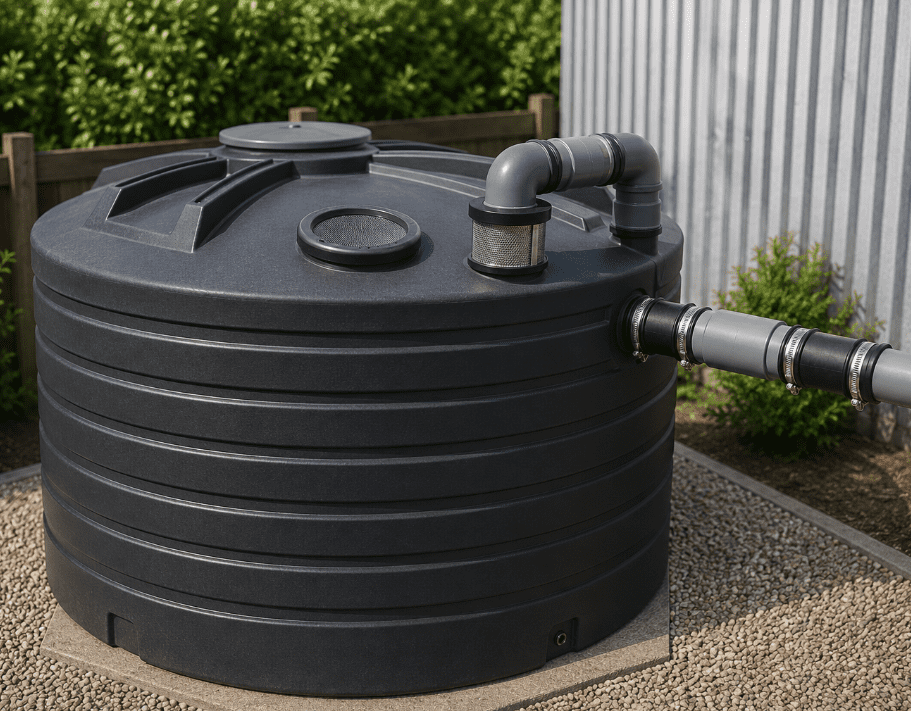
A rainwater tank can look secure from the outside while still offering flies an easy route in through an unprotected overflow, loose lid or open pipe connection. Knowing how to protect rainwater tanks from flies starts with identifying every opening that remains exposed once the tank is collecting water. A proper solution excludes insects without reducing the tank’s ability to overflow safely during heavy rainfall.
Flies are more than a nuisance around stored water. If they enter a tank, they can introduce organic debris and lay eggs where conditions allow. This can contribute to unpleasant odours, sediment build-up and poorer water quality, particularly in tanks supplying garden irrigation, washing systems or other non-potable uses. For properties that store water at scale, prevention is simpler and less costly than cleaning a contaminated tank after the event.
Start with the overflow outlet
The overflow is often the most overlooked entry point. It must remain open so excess water can discharge when the tank reaches capacity, but an open-ended pipe also provides direct access for flies, wasps, mosquitoes and, in some installations, rodents.
Fit a purpose-made insect screen to the overflow outlet rather than blocking or loosely covering the pipe. A suitable screen uses durable stainless-steel mesh to prevent insect ingress while allowing water and air to pass freely. This is critical: an overflow that cannot discharge at its intended rate can cause water to back up, escape around the tank lid, damage nearby surfaces or affect connected pipework.
The correct fitting depends on the outlet arrangement. Rainwater tanks and associated pipework may use BSP male or female threaded outlets, compression fittings, flanged connections or plain pipe requiring a universal connector. Measure the pipe outside diameter and confirm the fitting type before ordering. For threaded connections, also establish whether the existing thread is male or female. A screen that is well made but incorrectly matched to the outlet is unlikely to provide a reliable seal.
Do not rely on improvised mesh
Tying household mesh, fabric or sponge over an overflow can restrict flow, degrade outdoors and leave gaps around the pipe. It may also trap leaves and debris against the outlet, making a blockage more likely during prolonged rain.
Purpose-built overflow insect screens are designed for this exact application. They provide a secure fitting, weather-resistant mesh and a clear water path through the outlet. For external tanks, stainless-steel mesh is particularly useful because it withstands wet conditions and repeated cleaning better than lightweight temporary materials.
Keep the lid sealed and the inlet protected
An insect-proof overflow is the main defence, but it is not the only one. A tank lid should sit flat and close firmly around its full edge. Cracked covers, warped plastic, damaged inspection hatches and missing gaskets all create routes for flies to enter.
Check around pipe penetrations as well. The inlet, outlet, pump cable and vent connections can leave small gaps if they have not been finished properly. A tank does not need to be hermetically sealed, but every opening should either be sealed or protected with an appropriate insect-resistant screen.
The incoming water route needs attention too. Leaves, moss, bird debris and roof sediment give flies more material to feed or breed around, even where they cannot enter the tank itself. Gutters should be kept clear, and a suitable leaf filter or pre-tank filter should be maintained in line with the system design. Cleaner water entering the tank reduces sediment and makes inspection easier.
For tanks receiving water from roofs beneath overhanging trees, maintenance intervals will usually need to be shorter. The same applies where the property is close to fields, livestock areas, food waste storage or other locations with higher fly activity.
Protect every pipe, not only the tank
Rainwater systems are often assembled from several connected components: downpipes, filters, underground pipe runs, pump chambers, overflow pipes and drainage outlets. An insect screen on the tank overflow is highly effective, but another open pipe elsewhere in the system can undermine the result.
Walk the full route during a dry period and inspect all accessible terminations. Look for uncapped pipe ends, disconnected fittings, damaged grilles and open inspection points. Where an overflow discharges into a drain or connects to a drainage system, make sure the arrangement is suitable for the site and does not create a route for pests or foul odours to travel back towards the tank.
Where backflow is a concern, a correctly selected non-return or backwater valve can help prevent reverse flow from the drainage side. This is a separate function from insect exclusion, so it should not be treated as a substitute for a screened overflow. In some systems, both measures are appropriate: the screen keeps insects out at the tank outlet, while the valve controls unwanted reverse flow in connected drainage pipework.
Choose a screen that preserves overflow capacity
The best fly protection is not simply the finest mesh available. The screen must exclude insects while being sized and installed so it does not compromise the overflow’s capacity. This matters most on larger tanks, commercial sites and properties with substantial roof catchment areas, where a summer storm can send a high volume of water to the tank in a short time.
Avoid reducing a large outlet to a smaller screened connection without checking the effect on discharge. The overflow pipe should remain appropriately sized for the tank and catchment arrangement. If there is any doubt, an installer or drainage professional can assess the expected flow and confirm the right fitting format.
Position also matters. A screen fitted at the terminal end of an overflow is straightforward to inspect and clean. However, it should not sit where discharged water will continually splash against a wall, path or foundation. The outlet needs a clear, safe discharge route that directs excess water away from the building.
Inspect screens as part of routine maintenance
A screen only works while the mesh is intact and clear. Pollen, leaves, silt, cobwebs and airborne debris can collect on the external face over time. This does not mean screens are difficult to maintain, but it does mean they should be included in regular property checks.
For most domestic rainwater tanks, inspect the overflow screen at least twice a year, with additional checks before periods of expected heavy rainfall and after storms. Sites with high leaf fall or exposed locations may require more frequent attention. Look for blocked mesh, corrosion, loose connections, split seals and signs that water has been overflowing from an unintended part of the tank.
A simple maintenance routine should cover the following:
- Check that the tank lid, access hatch and pipe entries remain secure.
- Clear leaves and debris from gutters, filters and the overflow discharge area.
- Brush or rinse debris from the outside of the screen without damaging the mesh.
- Confirm that water can discharge freely from the overflow during testing or rainfall.
- Inspect the tank internally, where safe and practical, for excessive sediment, insect activity or unexpected odours.
Do not push tools through the mesh or enlarge openings to make cleaning quicker. If the screen is damaged or repeatedly blocking because of the surrounding environment, replace it or review the wider filtration and discharge arrangement.
Treat signs of flies as a system fault
Repeated flies around a rainwater tank usually indicate an access route, standing organic material or both. Spraying insecticide around the outside may reduce visible activity temporarily, but it does not correct the cause and is not a suitable approach near stored water.
Instead, trace the issue methodically. Check the lid first, then the overflow, inlet filter, vents and every pipe connection. Inspect the tank for decomposing leaves, dead insects or stagnant areas. If the water has become visibly contaminated, the tank may need to be emptied and cleaned in accordance with the manufacturer’s guidance before it is returned to service.
It is also worth being clear about intended use. Untreated harvested rainwater is generally suited to non-potable applications such as garden watering and toilet flushing where the system has been designed for that purpose. Keeping insects out improves hygiene and protects equipment, but it does not turn stored rainwater into drinking water without appropriate treatment and controls.
A small fitting that protects the whole installation
For homeowners, landlords and maintenance teams, the overflow screen is a small component with a large protective role. It prevents a common entry route for flies, supports cleaner stored water and does so without sacrificing the overflow function the tank needs in wet weather.
Choose a screen that matches the pipe connection, is made for outdoor service and leaves water free to discharge. Once fitted, make its inspection part of normal gutter and tank maintenance. A clean, secure overflow is one of the most practical ways to keep a rainwater system hygienic, dependable and ready for the next heavy downpour.